Alpha-Amylase Wholesale and Bulk Supply for Starch-Processing Manufacturers
Bulk alpha-amylase for manufacturers, distributors and resellers in baking, brewing, starch syrup, textile desizing, paper coating and fuel ethanol. Standard and thermostable grades, powder in 25 kg drums or liquid in 30 kg jerricans, MOQ 25 kg. Tell us the product, the quantity and the destination, and we will come back with a grade recommendation and a quotation.
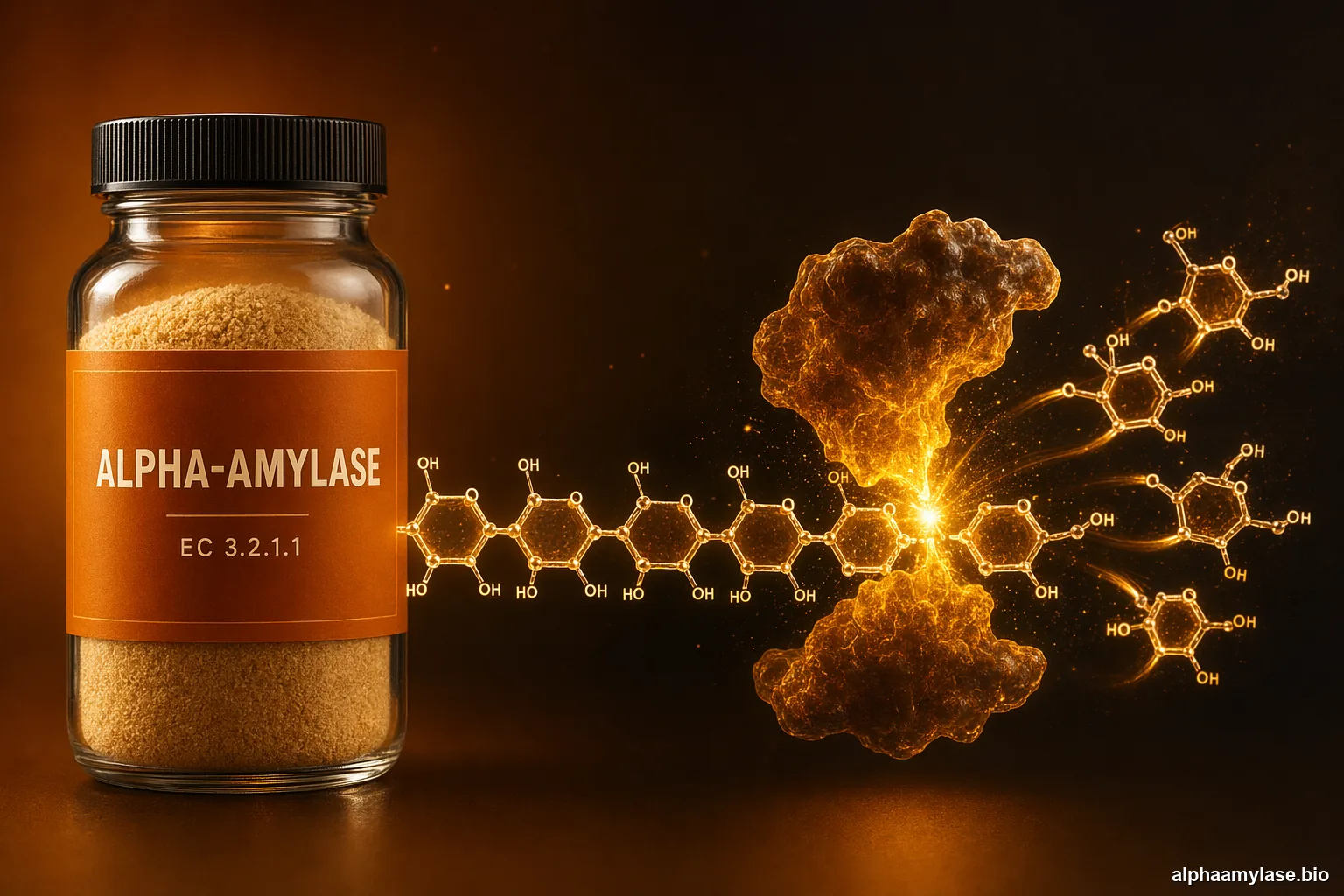
Alpha-Amylase Enzyme Powder
20,000 – 40,000 U/g
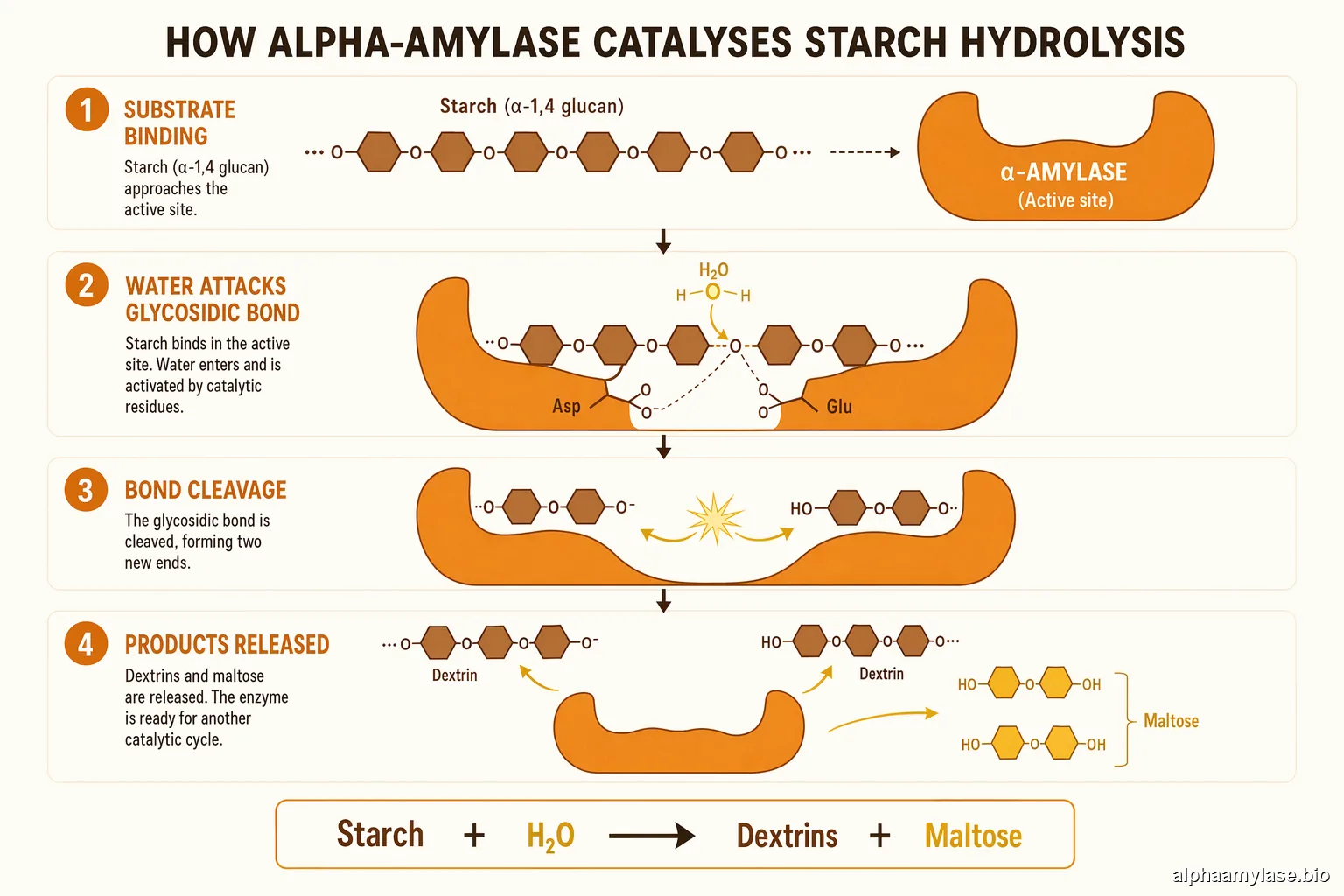
How Alpha-Amylase Catalyses the Reaction
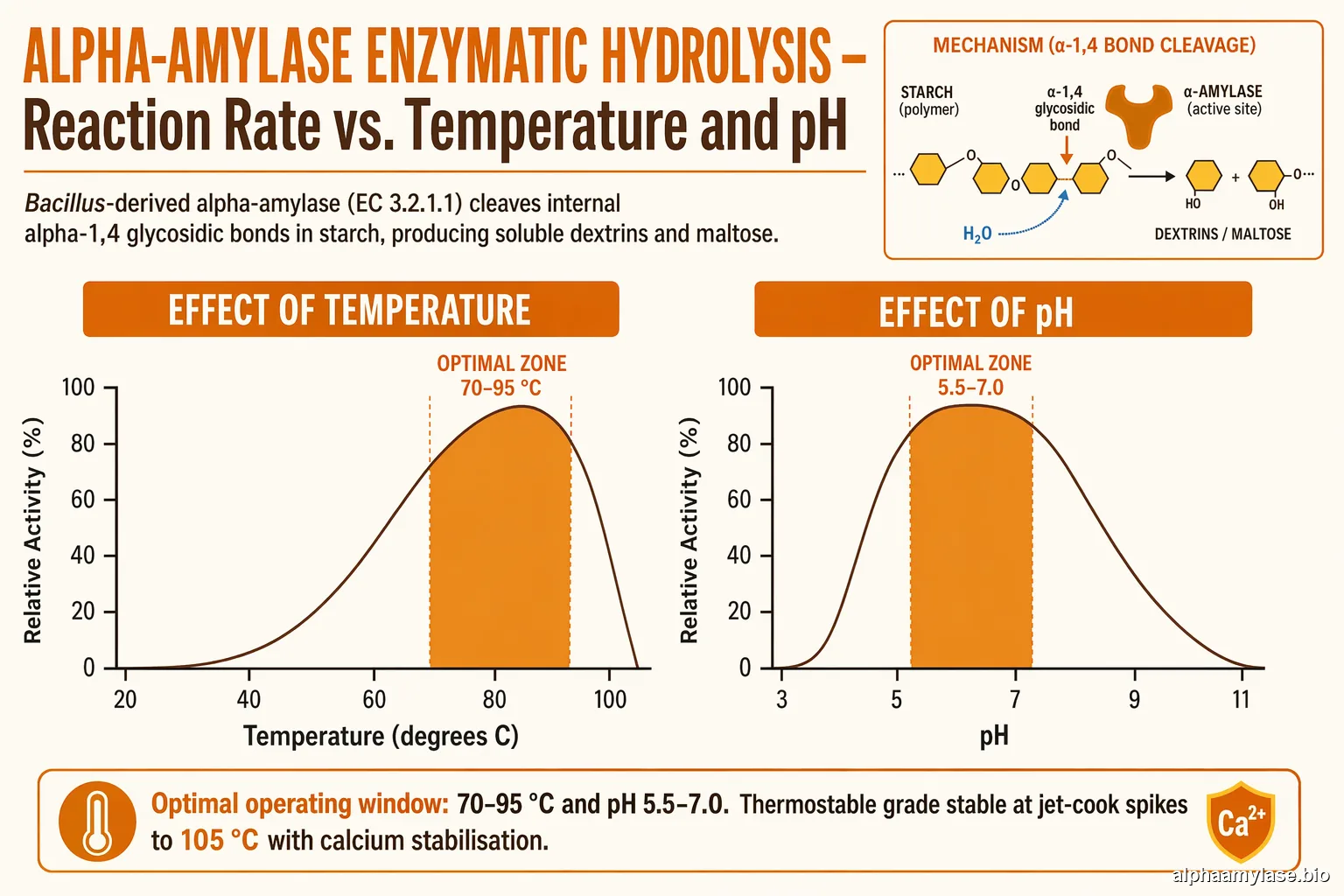
Activity vs. Temperature & pH
Reaction-rate curves for optimal temperature and pH — useful for process design and dosing.
Why Source From Us
- Worldwide shipping to 35+ countries
- ISO 9001, HALAL & KOSHER certified
- Food-grade & industrial-grade product lines
- Full batch traceability & technical data sheets

Alpha-Amylase Enzyme Specifications
01 Enzyme Name
Alpha-Amylase (EC 3.2.1.1)
02 Activity
20,000 – 40,000 U/g (thermostable grade: 60,000 U/g)
03 Optimal pH
5.5 – 7.0
04 Optimal Temperature
70°C – 95°C
05 Appearance
Light brown powder or amber liquid
06 Source
Bacillus subtilis / Bacillus licheniformis
07 Shelf Life
12 months (sealed, cool, dry place)
08 Packaging
25 kg drums (powder) / 30 kg jerricans (liquid)
09 MOQ
25 kg
10 Certifications
ISO 9001, HALAL, KOSHER, Food Grade
Applications
Alpha-amylase hydrolyses starch into dextrins and fermentable sugars, supporting commercial baking, brewing, syrup production, textile desizing, paper coating, and fuel ethanol processing.
Baking & Flour Treatment
Hydrolyses damaged starch at dough mixing, generating fermentable sugars for yeast activity. Typical 5–20 ppm on flour weight helps manage crumb structure and loaf volume. Fungal grade available on request.
Learn more →Brewing & Distilling
Accelerates mash conversion in all-malt and adjunct grists at 63–67 °C. Thermostable alpha-amylase maintains activity through higher-temp cooker rests to ensure consistent yield before saccharification.
Learn more →Starch Liquefaction
Primary liquefaction enzyme for glucose and HFCS syrup manufacture. Reduces viscosity in 30 % DS corn slurry post jet-cook, producing DE 10–15 dextrins at commercial scale.
Learn more →Textile Desizing
Removes starch sizing from woven cotton at 60–95 °C and pH 6.0–7.0 in pad-steam or saturator systems. Offers a gentler alternative to alkaline-oxidative methods.
Learn more →Paper & Pulp
Modifies starch viscosity in surface sizing and board coatings for improved runnability and pick resistance. Enables precise hydrolysis without over-thinning.
Learn more →Fuel Ethanol Liquefaction
Processes 32–33 % DS maize or cassava slurry through jet-cook and flash-cool steps. Thermostable grade pairs with glucoamylase for high-efficiency saccharification.
Learn more →Learn About Alpha-Amylase
Industry guides covering process windows, supplier qualification, dosage, and applications — written for procurement and process engineers.
Alpha-Amylase Supplier Guide for Industrial Baking
Source alpha amylase for baking with practical dosage, pH, temperature, QC, COA/…
Alpha Amylase Baking Enzyme Market
Process guide for industrial alpha amylase enzyme baking buyers: conditions, dos…
Alpha Amylase Enzyme Brewing
Troubleshoot alpha amylase enzyme brewing with practical pH, temperature, dosage…
Alpha Amylase Sirop for Baking
Troubleshoot alpha-amylase in baking: dosage, pH, temperature, QC checks, COA/TD…
Fungal Alpha Amylase
Compare fungal alpha amylase for baking: activity, pH, temperature, dosage, COA/…
Maxilase Alpha Amylase
Compare alpha-amylase enzyme specs for baking: activity, pH, heat profile, COA/T…
Why Manufacturers and Resellers Buy From Us
Frequently Asked Questions
Q1 What does alpha-amylase do in industrial processing?
Alpha-amylase is an endo-enzyme that cleaves internal α-1,4 bonds in starch, producing dextrins and maltose. It is employed in baking, brewing, starch liquefaction, textile desizing, paper coating, and ethanol production.
Q2 What is the alpha-amylase temperature range?
Standard grade operates around 60–70 °C; thermostable alpha-amylase performs between 70–95 °C and tolerates jet-cooker spikes. Select grade based on pH, solids content, and residence time.
Q3 What's the difference between alpha-amylase and beta-amylase?
Alpha-amylase acts internally on starch chains to quickly reduce viscosity. Beta-amylase releases maltose from chain ends. Each enzyme serves distinct roles and is not interchangeable in process design.
Q4 Do you offer a thermostable alpha-amylase grade?
Yes. Bacillus licheniformis-derived thermostable alpha-amylase is available at 60,000 U/g for high-temperature liquefaction in starch, ethanol, and distilling lines.
Q5 Is fungal alpha-amylase available for baking?
Yes. Fungal alpha-amylase can be quoted for specific bakery formulations. Our primary stock is bacterial alpha-amylase for consistent industrial bulk supply.
Q6 How much alpha-amylase should I dose in baking, brewing, and ethanol?
Typical usage: 5–20 ppm on flour weight in baking, application-specific low doses in brewing, and 0.5–0.8 kg/ton dry solids in starch liquefaction or ethanol. Confirm via pilot trials.
Q7 Is your alpha-amylase food grade, HALAL, KOSHER, and non-GMO?
Yes. Documentation for food grade, ISO 9001, HALAL, and KOSHER is available. Non-GMO options can be supplied depending on production lot and buyer requirements.
Q8 How do I request a free alpha-amylase sample and COA?
Provide substrate, process parameters, target dosage, and annual requirement via the contact form or email. We will recommend format and grade, then arrange a free 100 g sample with COA and TDS.
Certifications & Standards
Request a Quote: Wholesale and Bulk Alpha-Amylase
For manufacturers, distributors and resellers. Tell us (1) the product: grade or application, process temperature and pH if you know them; (2) the quantity: per order or per month, powder or liquid; (3) the destination country and preferred delivery terms. We reply with a recommended grade, pack size and a quotation. Price, lead time and freight are quoted per order. We will advise on powder vs liquid and standard vs thermostable grade, ship a free 100 g sample with COA, and quote bulk pricing within 24 hours.
Years experience
Countries shipped
We have received your message. We will reply by email.